
Context
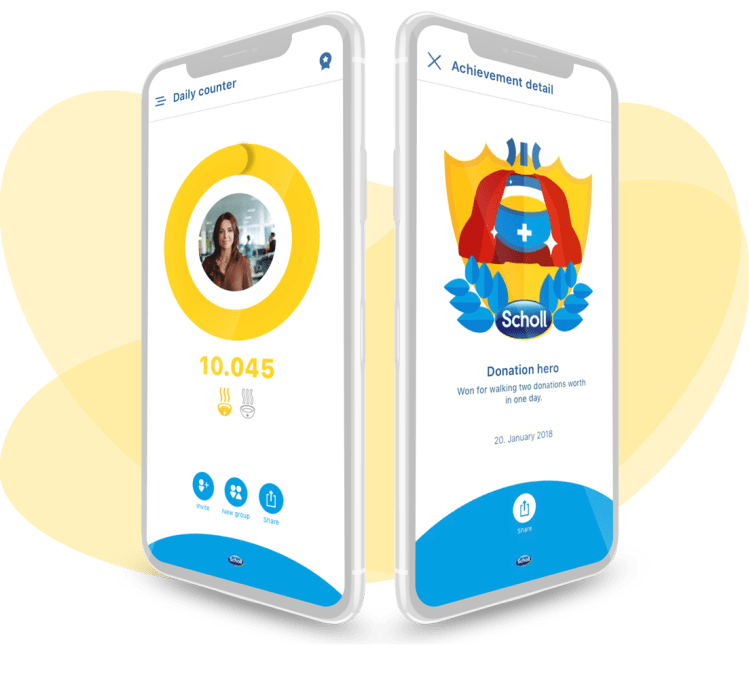
The app was intended to promote Scholl’s brand and a healthy lifestyle. Scholl has partnered with the the RedCross and created a donation campaign. The app aims to stimulates its users to be healthy with philanthropy, by donating a meal to a child in need for each 10000 steps a user has walked in a day.
My role was to design an appealing app, that would showcase and promote the brand, keep track of the user’s step count and engage them and their friends in achieving the 10k goal.
Our team has worked with personas to come up with a stimulating UX, to encourage them to achieve their step goal.
I have designed the concept, the UI, the UX, the iconography and illustrations. Together with the developemnt team, we have worked on achieving the best solutions within our budget and deadline.
Problem statement
Design an app representing the Scholl brand that would stimulate users to reach a daily goal of 10k steps. The incentive provided by Scholl is a meal donated to a underprivileged child in Maui for each daily 10k per user.
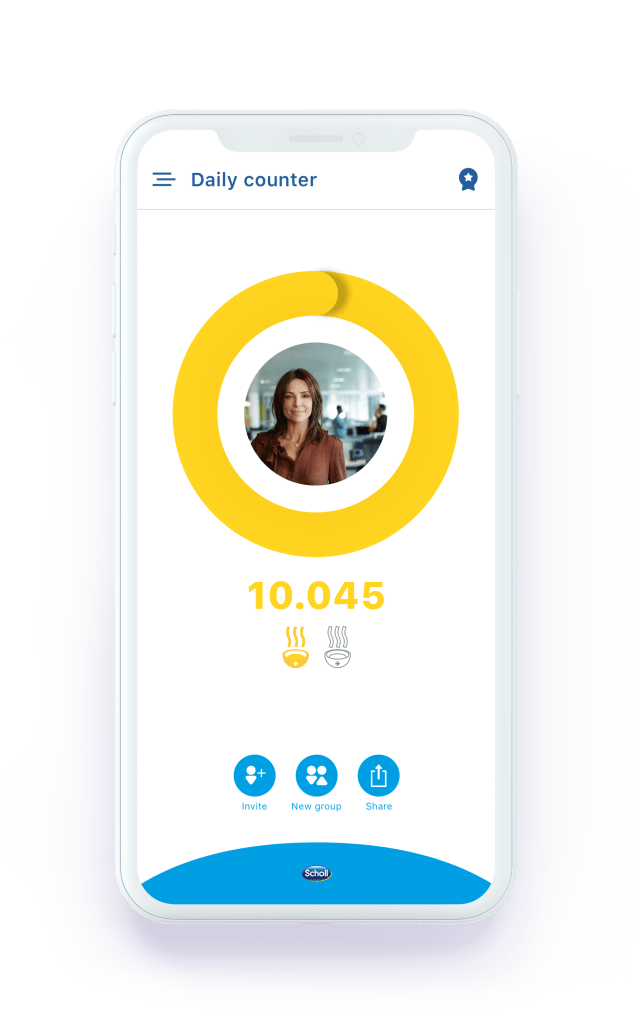
- design a status screen showcasing daily progress
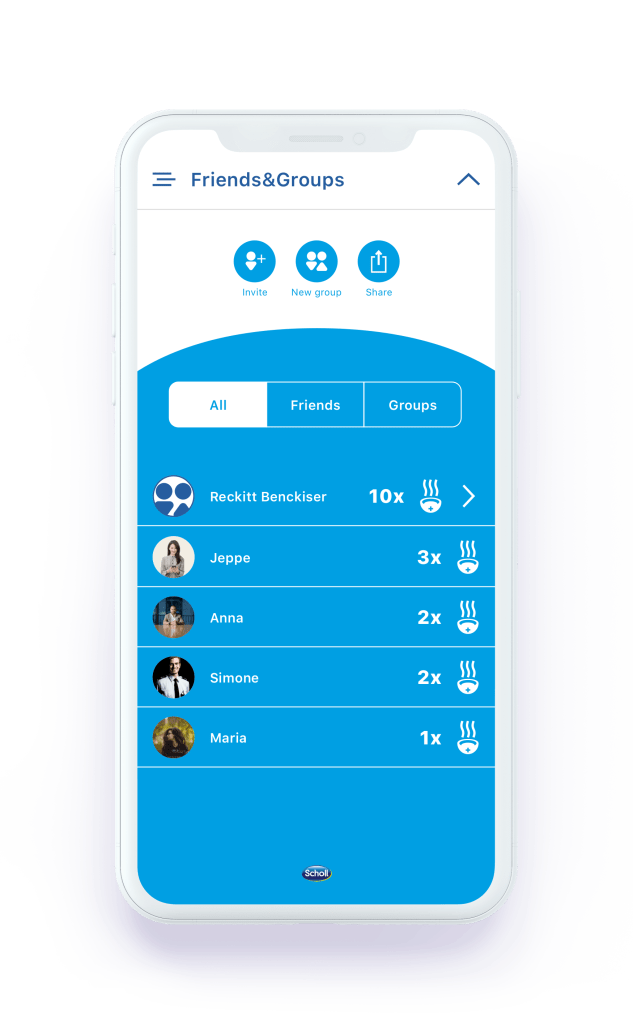
- integrate a social aspect not the functionality to generate traffic to the app and enable to users engage with their peers
- integrate gamification elements to help stimulate the users achieve their goal
Research and conceptualisation
The client handed over a rough concept: promote the brand and its values by creating an app to help promote healthy living through philanthropic incentives.
The requirements were:
- provide a dashboard for tracking daily progress
- allow users to engage socially in the app through a Facebook login.
Further on, the concept was designed by myself, in collaboration with the project manager and feedback from the stakeholders. In order to support users in achieving the 10k goal, we added extra functions to the concept. They would provide a richer and more engaging user experience:
- group challenges
- competing with your friends by seeing their progress and sharing yours
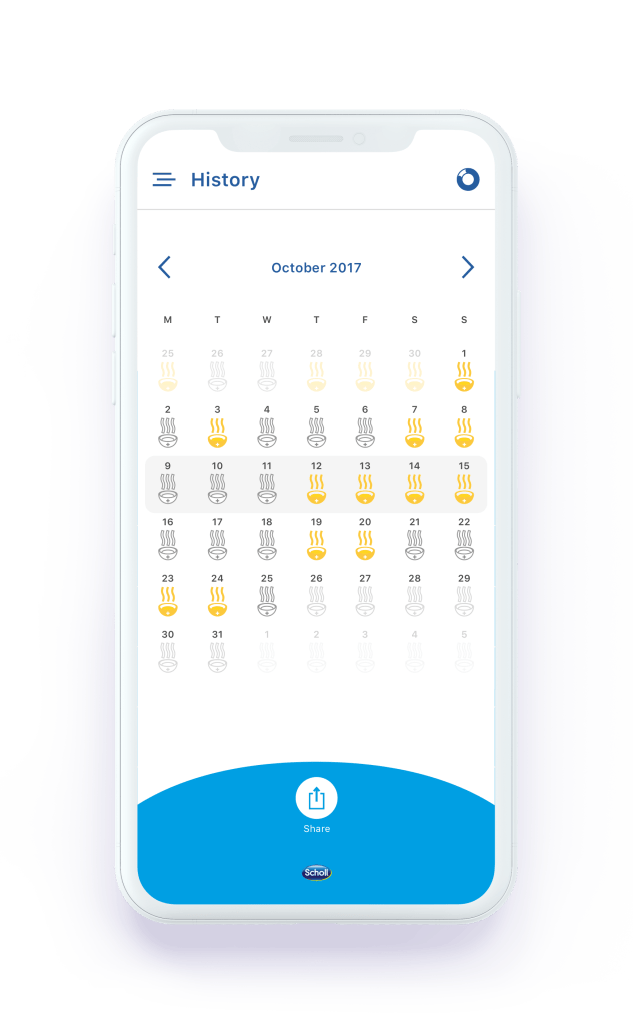
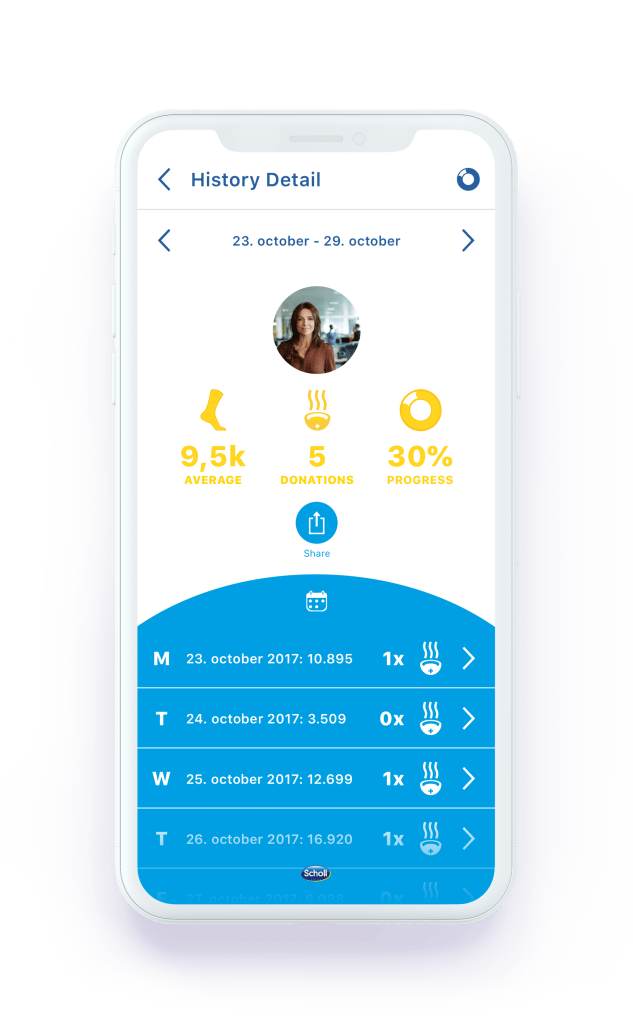
- viewing your history, to support consistency – see the cumulated progress you make over time; even if you miss your daily goals, you are still improving
- keep track of how many meals you have donated
- win achievement medals for crossing milestones such as 100k total steps
- health and exercise tips
All of these ideas came in the Ideation phase of our design thinking process.
Design thinking – Empathise
Who are we building this for and what challenges and needs do they have?
To answer this question, I – together with the project manager – outlined three personas:
- high activity level
- moderate activity level
- low activity level
We based our definitions on a survey within our network targeting people from 16 to 60 y/o, investigating three factors:
- environment and causes – what type of work? what consequences does their daily activity have?
- goals and reasoning: what are they struggling with? what do they want to improve, if anything?
- how many days in a week do they reach the set goal of 10k steps/day
In order to guide our work in creating these personas we looked into similar apps that could potentially be used by a common target group, these being fitness and health apps. The products we found have a similar user delimitation when setting up the app in order to determine your needs.
Design thinking – Define and Ideate
We worked towards building up the product concept from the given requirements and the defined personas.
Starting point was to define a potential goal in reaching 10k/day/week that can be relevant for each persona:
- high activity level: 4-7 days/week
- moderate activity level: 2-4 days/week
- low activity level: 1-2 days/week
Based on we defined the previously mentioned functions, trying to accommodate each persona in reaching their goal.
- high activity level: progress reminders during the day (eg.: 1k steps left)
- moderate activity level: progress reminders, social incentives (group challenge, notifications once most of the group is done), gamification (receive an achievement medal for 100k total steps walked)
- low activity: tips on how to get more steps in order to be able to act on the other incentives (eg.: park your car 1 street away from your office, etc)
These concepts were ran by the stakeholders and approved.
Design thinking – Prototype
The definition phase has provided a solid base for our design, which you can see below:

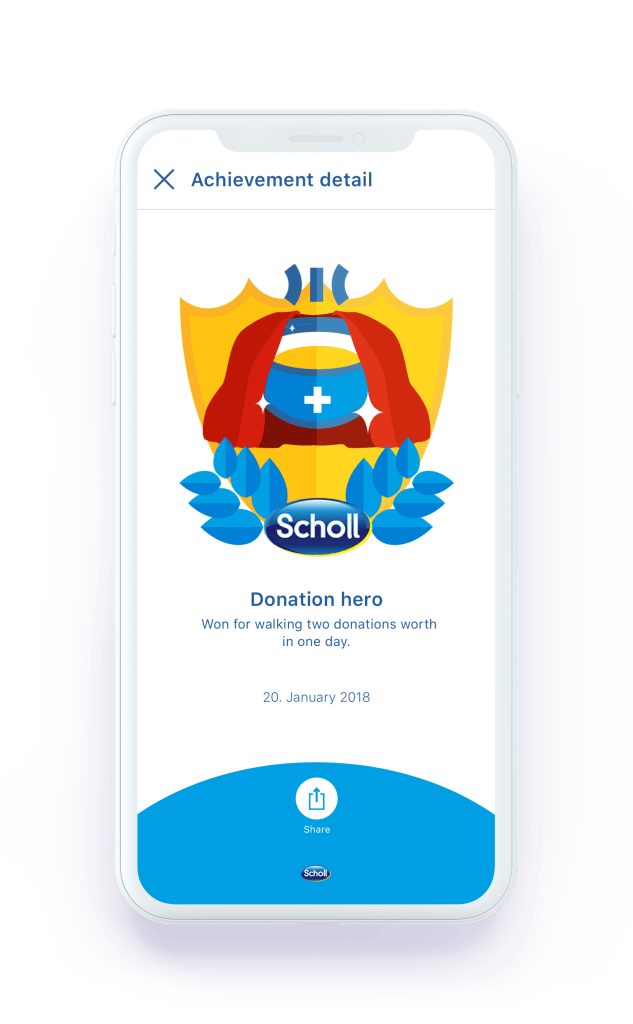
Medal illustrations for reaching your goals
















Your message has been sent

 Dirlau portfolio